
Capabilities
- Audio player
- JWT authentication
Frontend
 Angular
 TypeScript
 Material
 RxJS
RxJS iTunes
Spotify Clone
CompletedA recreation of the Spotify experience in Angular 19 with Material: music discovery, search, favourites, playlists and a complete player. The catalog and its 30-second previews come from the iTunes search API, while sessions, favourites and lists rely on a custom Node API. The centrepiece is the player: a single audio element wrapped in streams that half a dozen components feed from.
The challenge
The interesting part wasn't the markup, it was the player: a single audio element half a dozen components depend on at once, each needing to know what's playing, where the progress bar is and what comes next.
Screenshots
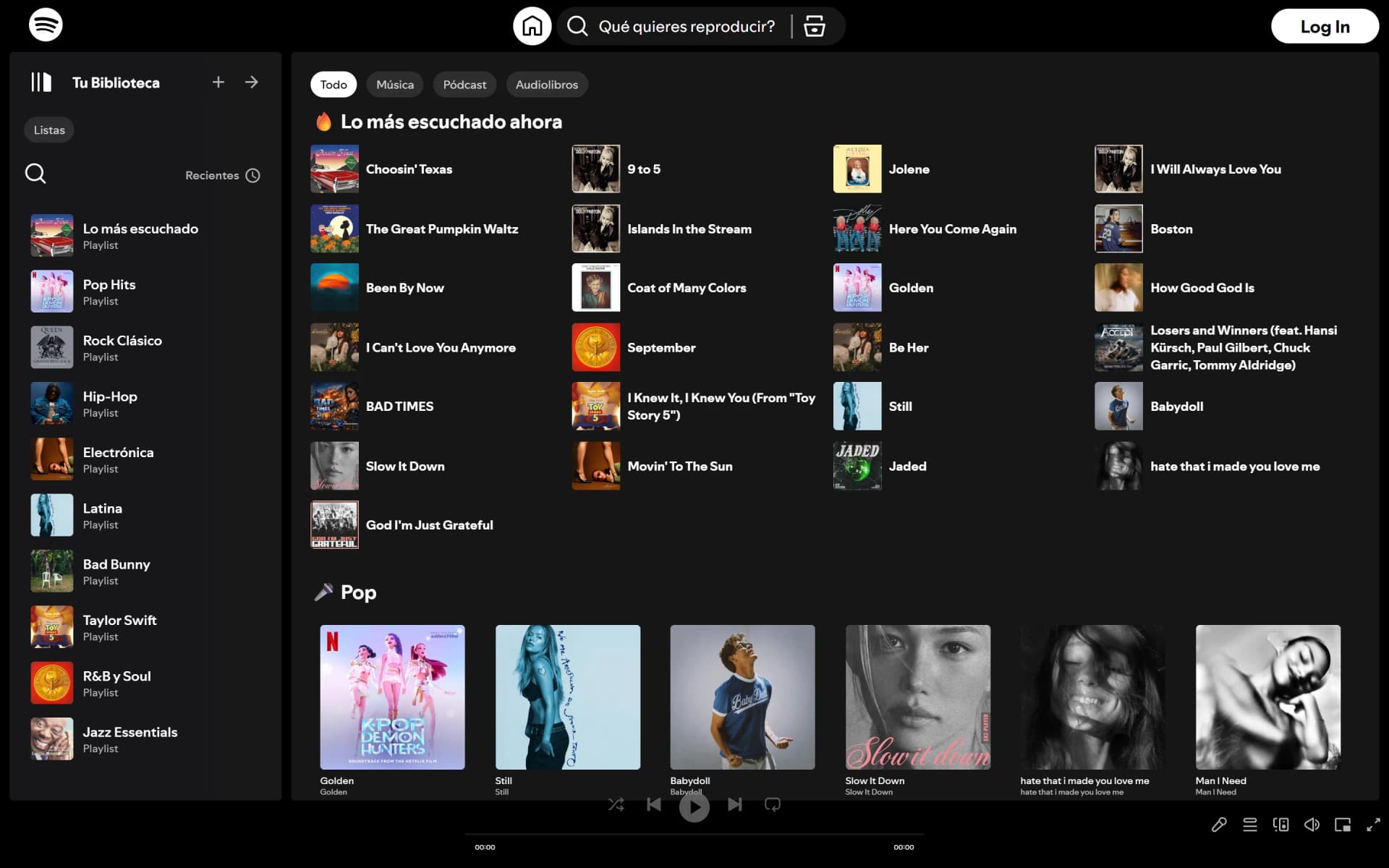
Desktop 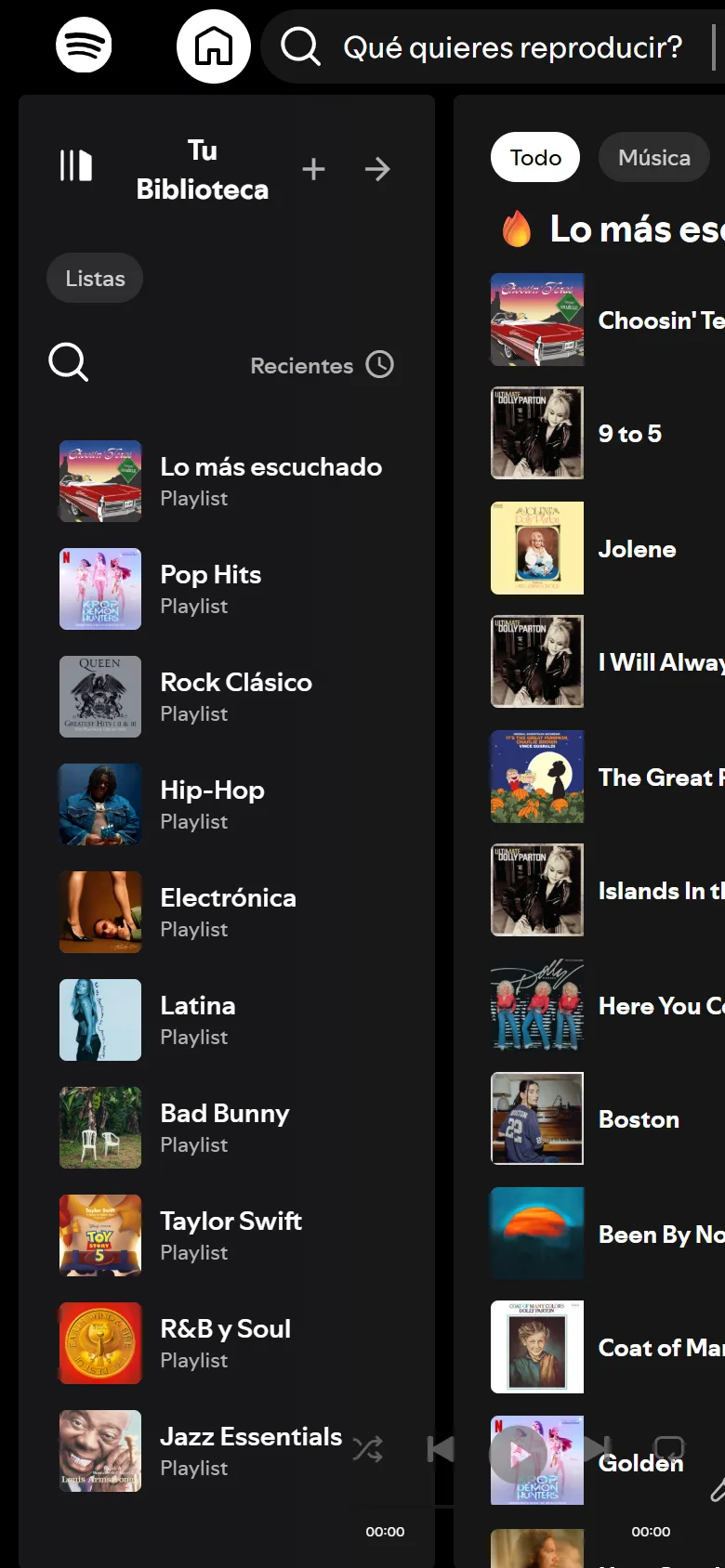
Mobile
Architecture
Architecture diagram for Spotify Clone
Implementation
A player built on RxJS
A service wraps the browser audio element and exposes all of its state — current track, progress, elapsed and remaining time, playback status — as streams, so any component subscribes to what it needs without touching the audio directly.
Queue, shuffle and repeat modes
Queue management with an active index and an identifier for the source feeding it, shuffled playback, three repeat modes (off, all, one), plus volume control with mute and restore of the previous level.
Catalog from the iTunes API
Global charts and search served by the iTunes search API, with term, limit and country-code validation inside the service itself, playing back the 30-second previews.
Session with guard and interceptor
Login against a custom Node API, token stored in an expiring cookie, an interceptor that injects it into every request and a guard protecting private routes.
Favourites, playlists and recents
Dedicated services for favouriting tracks, assembling playlists and keeping recently-played history, feeding the sections on the home screen.
Custom SCSS system
Lazy-loaded modules per domain and a home-grown style base — variables, flex utilities, responsive breakpoints and view transitions — layered on top of Angular Material.