
Capabilities
- Streamed AI
- Speech and transcription
- Image generation
- Local models
Frontend
 Angular
 TypeScript
 Tailwind
Backend
 NestJS
 Node.js
 PostgreSQL
 OpenAI
 Ollama
ChatGPT Clone
CompletedFull-stack app bundling several AI use cases on a shared backend: spell checking, translation, streamed pros-and-cons discussion, text to speech, audio transcription, image generation and variation, and a conversational assistant with persistent threads. The Angular 19 frontend never talks to OpenAI: everything goes through a NestJS API that isolates each capability in its own use case and persists history in PostgreSQL.
The challenge
Putting an OpenAI key in a frontend isn't an option, and every model capability answers differently: JSON, text, a stream, audio or an image. The goal was an architecture where adding a new use case means adding one file, not rewiring half the app.
Screenshots
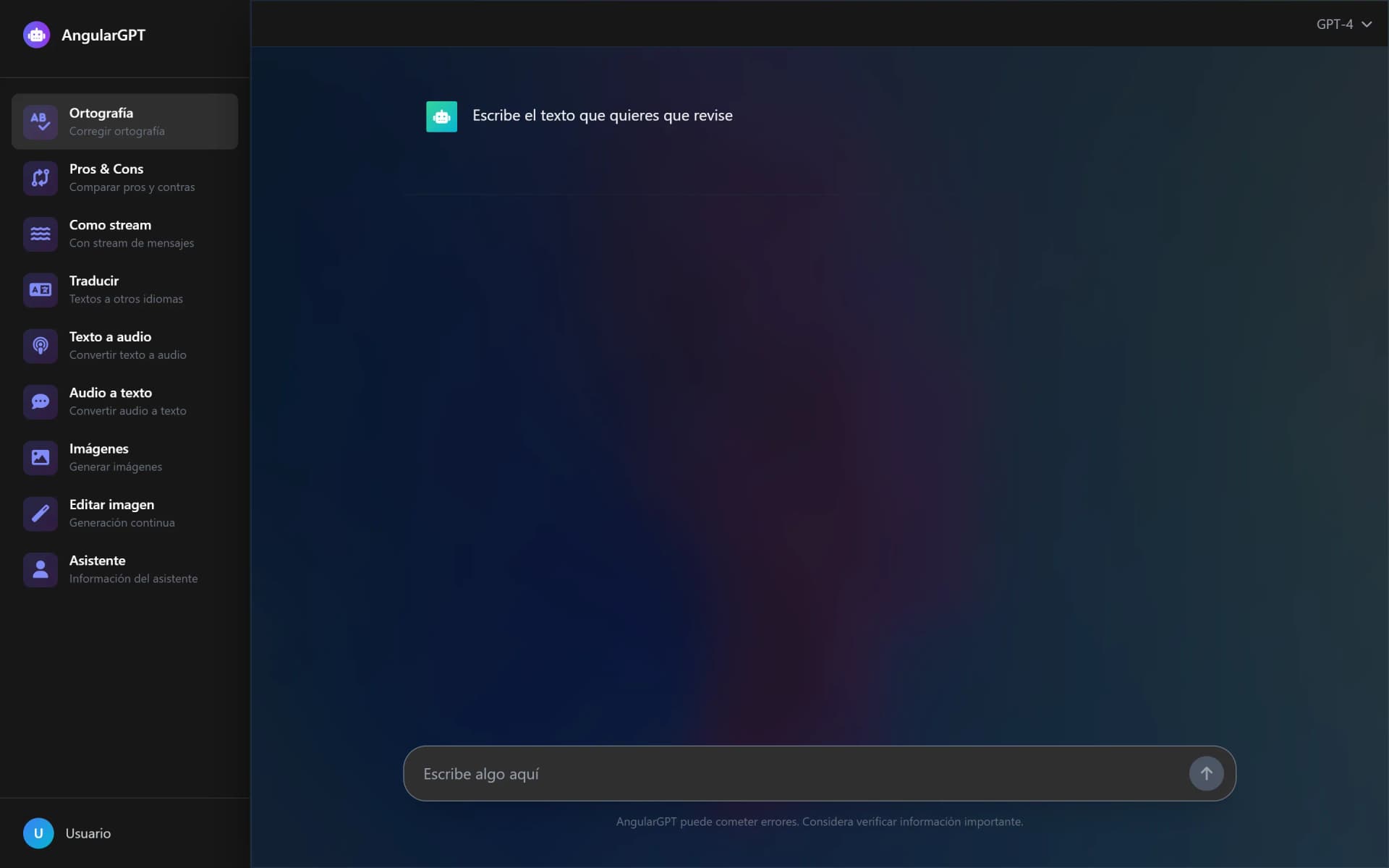
Desktop 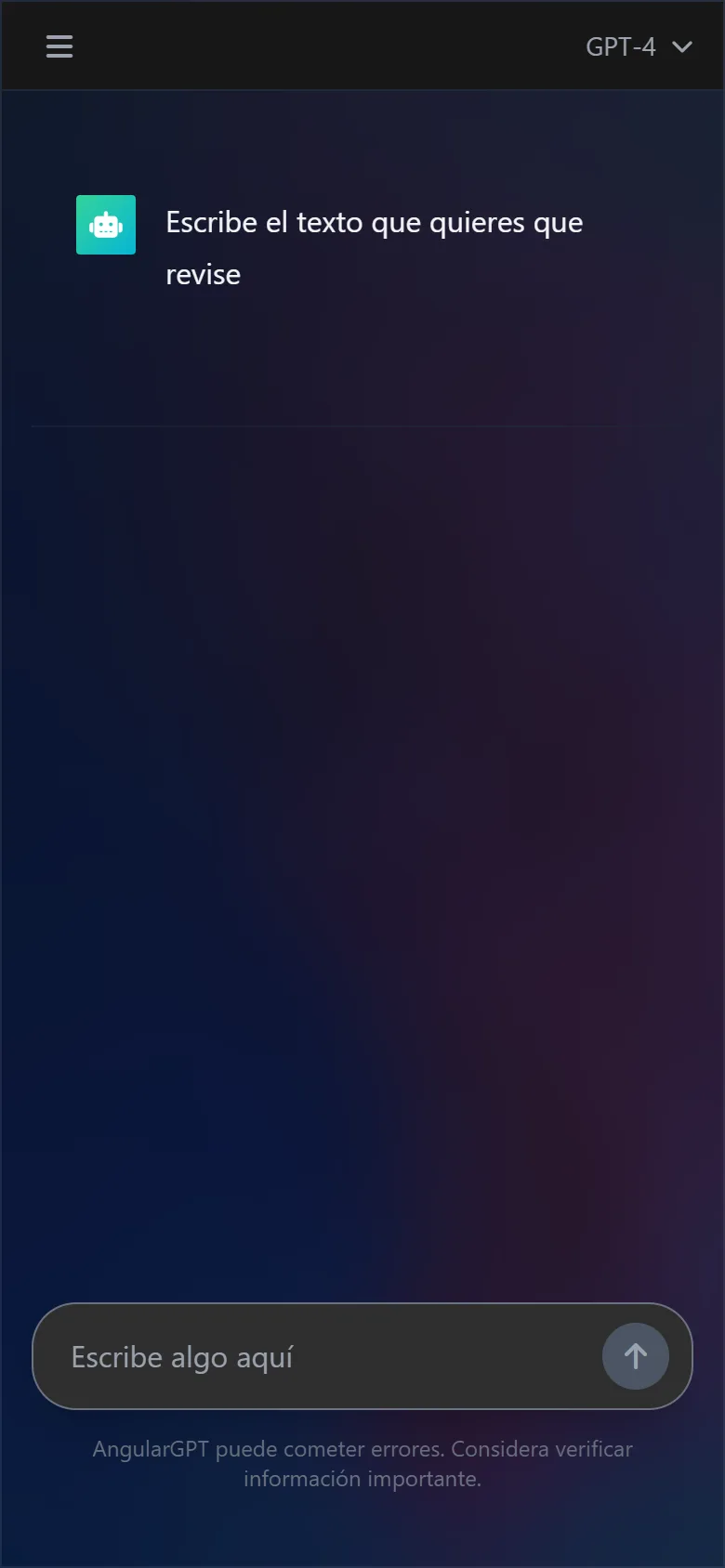
Mobile
Architecture
Architecture diagram for ChatGPT Clone
Implementation
The backend is the only thing holding the API key
NestJS acts as a proxy: the browser never talks to OpenAI directly. Each capability lives isolated in its own use case, so adding one doesn't touch the rest.
Token-by-token streaming
Long answers are relayed to the client as they arrive through a custom pipe over the OpenAI stream, which also shuts down cleanly if the client aborts mid-generation.
Multimodal, not just text
Spelling, translation and pros/cons in text; text to speech and audio transcription with uploads validated by type and size; plus image generation and variation.
Assistant with persistent threads
Alongside completions-based chat, a separate module uses the Assistants API, creating threads that keep conversation context across requests.
Swappable provider via Ollama
The same use cases have an alternative Ollama implementation for running models locally, and a public endpoint reports which providers a given deployment has available.
History persisted in PostgreSQL
Conversations and messages are stored with TypeORM, alongside JWT authentication, email password recovery and the app's own user accounts.
Hardened API
Rate limiting with Throttler, security headers via Helmet, compression, environment validation with Joi at boot and DTOs validated with class-validator.